
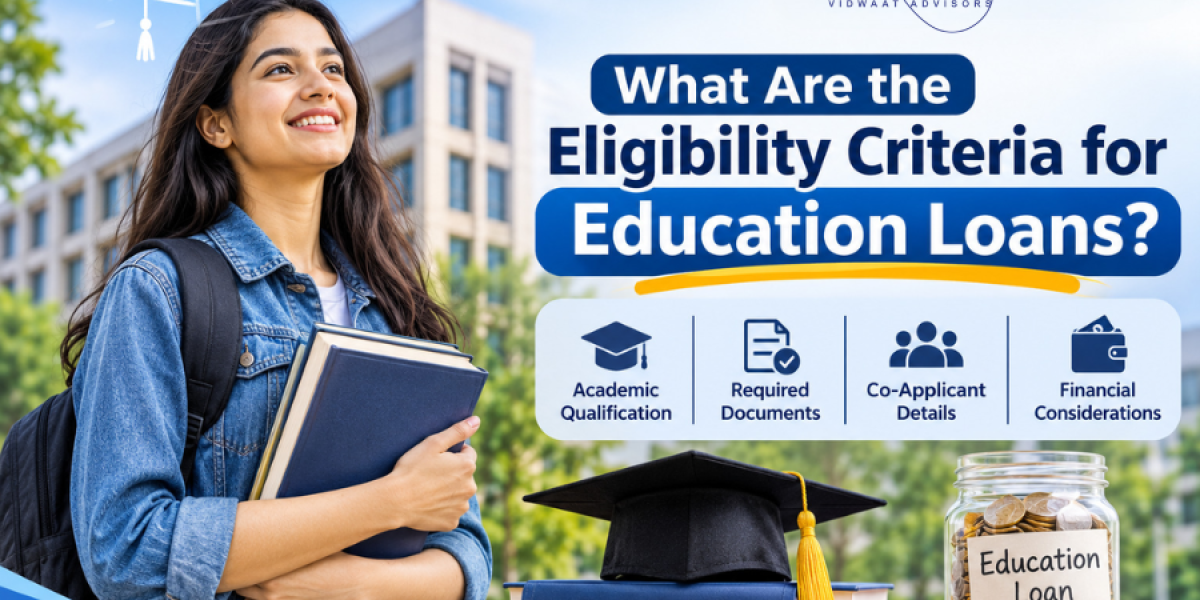
Education Loans | Eligibility & Funding | VIDWAAT
Higher education is an important investment for a student’s future, but the cost of professional courses, university programmes and international education can be challenging for many families. Tuition fees are just part of the cost. Accommodation, books, travel, equipment and other academic requirements can also increase the overall financial burden.

Education loans provide a structured financing route and an opportunity for students and their families to meet these expenses. However, before you apply, it is important to understand the eligibility criteria. VIDWAAT offers education loans as part of its funding options, helping applicants explore financing based on their educational and financial needs.
Who Qualifies for Education Loans?
Eligibility for education loans depends on several factors, including the student’s academic background, admission status, selected course, and the lender’s policies.
Generally, lenders consider the following:
- Nationality: Many education loan schemes are designed for Indian students, although eligibility conditions differ between lenders.
- Admission status: Applicants are generally required to have secured admission to a recognised educational institution.
- Academic performance: Previous academic records may be reviewed to understand the student’s educational background.
- Course selection: Undergraduate, postgraduate, professional, technical, and other recognised courses may qualify, depending on the lender.
- Co-applicant: A parent, guardian, or eligible earning family member may be required to support the application.
These are common eligibility considerations, not universal rules. Final approval depends on the financial institution’s assessment.
What Expenses Can Be Covered Through Education Loans?
The purpose of education loans is to help students manage eligible costs associated with their studies. The expenses covered depend on the selected lender and the terms of the financing arrangement.
1. Tuition and admission fees
Tuition fees and mandatory admission charges usually form the primary component of an education funding requirement.
2. Accommodation and living expenses
Certain loan products may cover hostel fees and other approved living expenses during the academic programme.
3. Books and academic equipment
Students may need textbooks, computers, specialised equipment, and other learning materials. Eligible expenses may be considered as part of the loan.
4. Examination and institutional charges
Laboratory fees, examination charges, and other compulsory academic expenses may also be included where permitted.
5. Overseas education expenses
Students planning to study abroad may explore funding for eligible course fees, travel, accommodation, and related expenses, subject to lender conditions.
Preparing a complete estimate of these costs can help applicants identify their actual funding requirement.
Why is the co-applicant’s financial profile important?
Many students applying for education loans do not have an independent income. As a result, lenders may evaluate the financial profile of a parent, guardian, or another eligible co-applicant.
The assessment may include:
- Monthly income: Regular income helps lenders understand the co-applicant’s financial capacity.
- Credit history: Previous borrowing and repayment behaviour may influence the application.
- Existing EMIs: Current financial commitments are considered when assessing repayment capacity.
- Employment or business stability: The nature and continuity of the co-applicant’s income may be reviewed.
- Financial documentation: Bank statements, income records, and tax documents may be requested.
A strong financial profile can support an application, although it does not guarantee approval.
Documents Required Before Applying
Incomplete documentation can delay the assessment of education loans. Students and co-applicants should prepare the relevant records before approaching a lender.
Commonly requested documents include:
- Identity proof and address proof.
- Academic mark sheets and certificates.
- Admission confirmation or offer letter.
- Detailed course fee structure.
- Estimated academic and accommodation expenses.
- Co-applicant’s income proof and bank statements.
- Employment or business-related financial records, where applicable.
- Passport and visa documents for overseas education, where required.
Additional documents may be requested depending on the course, loan amount, and lender’s requirements.
Planning Education Funding Beyond Tuition Fees
Funding higher education is about more than just paying tuition fees for the institution. Families may also have to factor in other course-related costs like accommodation, travel, study materials and examination charges. Applicants don’t underestimate the amount they may need if they know the full money they require.
VIDWAAT’s financing portfolio includes loans for education and also customised financing solutions for varied requirements. Those interested in education funding can contact VIDWAAT to discuss their financial needs and find out what can be achieved through its funding network.
Applicants should consider likely course expenses, the co-applicant’s financial circumstances and the repayment commitment they can genuinely afford before applying. This enables us to approach the funding process with a clear understanding of the requirement rather than just the loan amount.
What Should You Compare Before Selecting a Loan?
Choosing between education loans requires a careful review of the complete borrowing terms. A lower advertised interest rate does not necessarily mean that the overall financing cost will be lower.
Applicants should compare:
- Interest rates and whether they are fixed or floating.
- Processing fees and additional charges.
- Repayment tenure and instalment structure.
- Moratorium period and interest treatment during studies.
- Collateral and co-applicant requirements.
- Prepayment and foreclosure conditions.
Understanding these terms helps families select financing that is compatible with their expected financial position after the course.
Frequently Asked Questions
Who can apply for education loans?
Students with admission to eligible educational institutions may apply, subject to nationality, academic, financial, and lender-specific requirements.
Is a co-applicant compulsory for education loans?
Many lenders require a parent or eligible guardian as a co-applicant, particularly when the student does not have an independent income.
Can education loans cover overseas studies?
Eligible students may explore overseas education funding for approved courses and expenses, depending on the lender's policies.
Final Thoughts
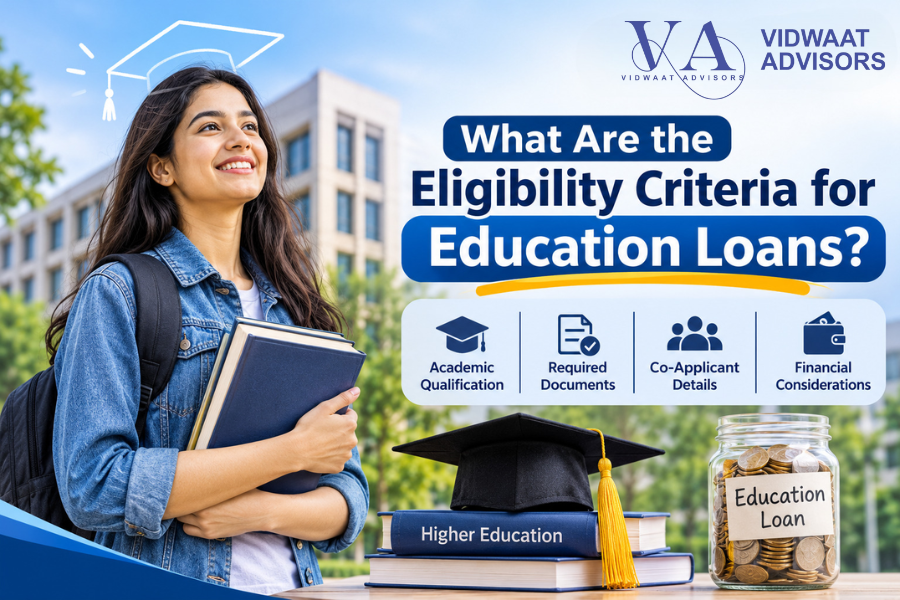
Education loans can help students pursue higher education by providing financial support for eligible academic expenses. However, admission status, academic records, co-applicant details, income stability, and documentation all play a role in the lender’s assessment.
VIDWAAT includes education loans in its specialised funding portfolio, giving students and families the opportunity to explore education financing. Reviewing eligibility and repayment conditions carefully can help applicants make informed decisions while planning their academic future.